One Estate, One Family, the Origin of a Company
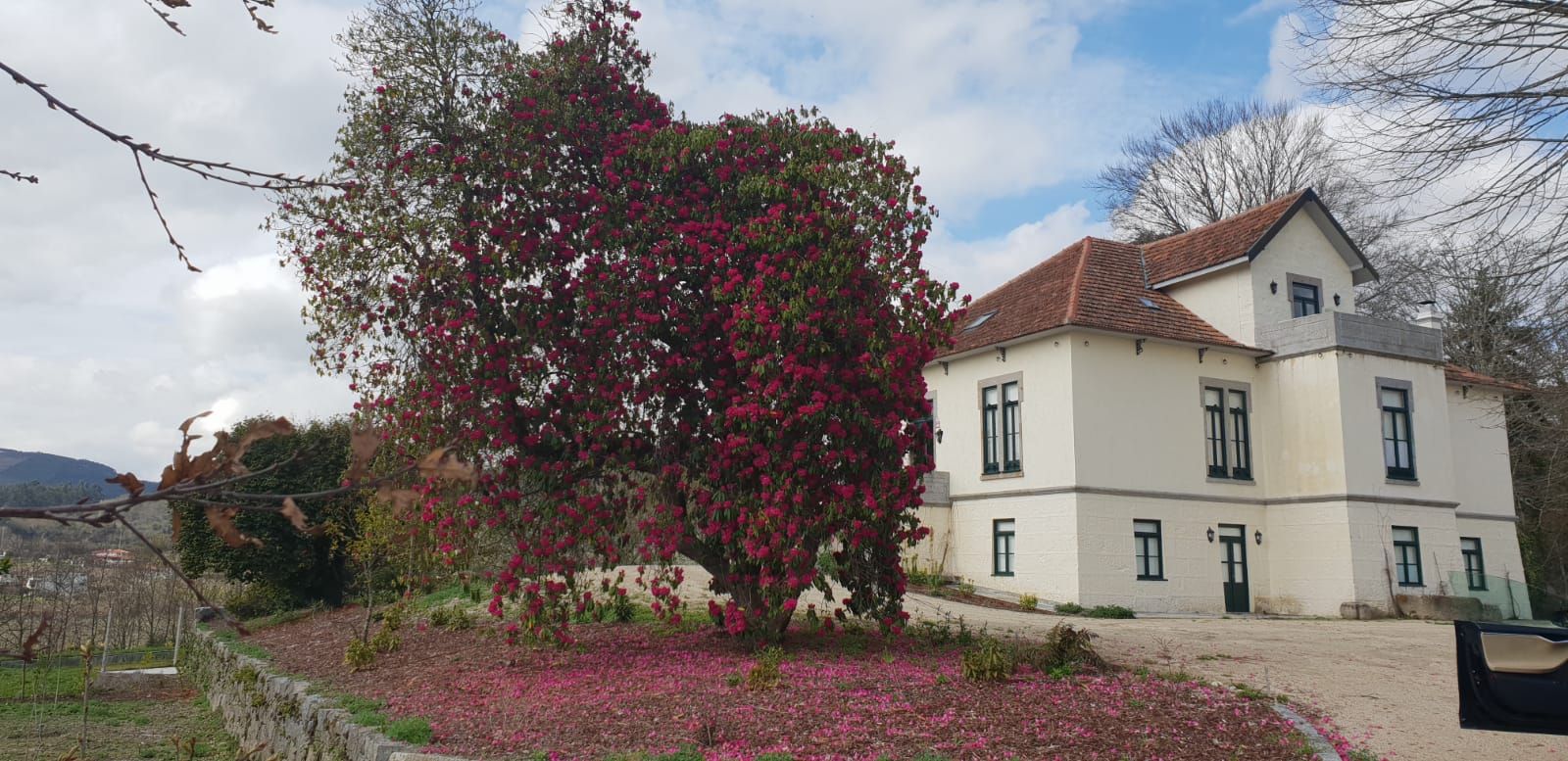
Quinta de Valinhas lies in the Sousa river valley, in the parishes of Unhão and S. Cristóvão de Lordelo, in the municipality of Felgueiras.
The Meireles family has kept and farmed it since the 17th century, building on and enlarging the landholding ever since. It reached its final shape at the beginning of the 20th century, with 32 hectares of land, 22 of them given over to vines.
Every generation invested in the estate — land, farm buildings, the manor house, land improvements — and the estate adapted to the crops and techniques of each era.
As recently as 50 years ago it produced wine, milk, meat, flax, vegetables, fruit and timber: the typical mixed farm of Entre Douro e Minho.
In 1998 Quinta de Valinhas was owned in equal shares by Isabel Maria Cabral de Ribeiro Meireles and her son, João António Meireles de Melo e Magalhães, and it then had about 5 hectares of vines, 18 hectares of arable land and 7 hectares of woodland.
That same year, after completing his degree in Agricultural Engineering at UTAD, Eduardo Magalhães joined the family farm, helping his father to manage and run it.
The first major step, still in 1998, was to restructure the 5 hectares of existing vines.
Quinta de Valinhas, Lda.

On 11 June 2004, Eduardo's brothers, Manuel Maria and Gonçalo Cristóvão Magalhães, and Frederico Aranha, founded Quinta de Valinhas, Lda. to farm and run the property commercially, with the agreement of their father, João António, and their grandmother, Isabel Maria.
They began by diversifying the estate's production, planting 6 hectares of red berries (raspberries, blackberries, strawberries) to sell them in specialist and traditional grocers in Foz do Douro, while also farming the 5 hectares of vineyard restructured in 1998 and more than 4 km of pergola-trained vines (ramadas and arejões).
But it would be the passion for viticulture and the success of restructuring the 5 hectares of vines in 1998 that made the company thrive and expand beyond the boundaries of Quinta de Valinhas, giving rise to Dardas wine.
The company, year by year
- 2008A further 4.5 hectares planted at high density (4,200 vines per hectare), still rare in the region: 2.2 ha of Loureiro at Mata Grande, the rest Fernão Pires at Mosquete.
- 2010Leases and plants Loureiro at Quinta do Rio, in Vila Boa de Quires.
- 2013Plants the Vinha do Dardas at Valinhas: 6 hectares, 3 of them Alvarinho, in the north-facing valley (south-west–north-east orientation). Leases Quinta de Agrellos in Santa Cruz do Douro, Baião.
- 2017The Vinha do Dardas grows by another 6 hectares: 12 hectares in a single block on the mid-slope.
- 2019First wine: Dardas Alvarinho, 2,500 bottles.
- 2020First Dardas Avesso (2,500 bottles) and Dardas 2 Castas, 50% Alvarinho and 50% Avesso (3,550 bottles).
- 2021Sales begin: Dardas Alvarinho 2021, Dardas Avesso 2020 and Dardas 2 Castas.
- 20225,160 bottles of Dardas Alvarinho and 9,000 of Dardas Colheita, a blend of Alvarinho, Arinto and Avesso.
- 20235,100 bottles of Dardas Alvarinho and 2,500 of Dardas Avesso.
- 20242,750 bottles of Alvarinho and 2,500 of Avesso. 750 litres made by “passerillage sur souche” stay in the cellar: 500 in barrel, 250 in stainless steel.
- 2025Alvarinho and Avesso 2025 and three new wines: Dardas Passerillage 2025 (1,003 bottles), Dardas Loureiro 2025 (200 bottles, from the Mata Grande vineyard) and Dardas Rosé 2025, from pergola-trained Espadal (about 970 bottles). Three new 500-litre French oak barrels take Loureiro “passerillage”, Alvarinho and Avesso.
- 2026In October, Dardas Passerillage 2025 and Dardas Loureiro 2025 are released.
- NextA winery and tasting room on the estate. PÚBLICO, 2026 (opens in a new window)
“We try to touch the wine as little as possible — the grape has to show the land.”